Understanding Patient Assistance Programs: What They Are and How They Work
Understanding Patient Assistance Programs: What They Are and How They Work
For many people, the cost of prescription medications can be overwhelming. Even with insurance, high copays, deductibles, or coverage gaps can make it difficult to afford the medications you need.
That’s where Patient Assistance Programs (PAPs) come in.
These programs are designed to help eligible individuals access medications at little to no cost — but understanding how they work (and what’s required) can make a big difference in successfully getting approved.
What Are Patient Assistance Programs?
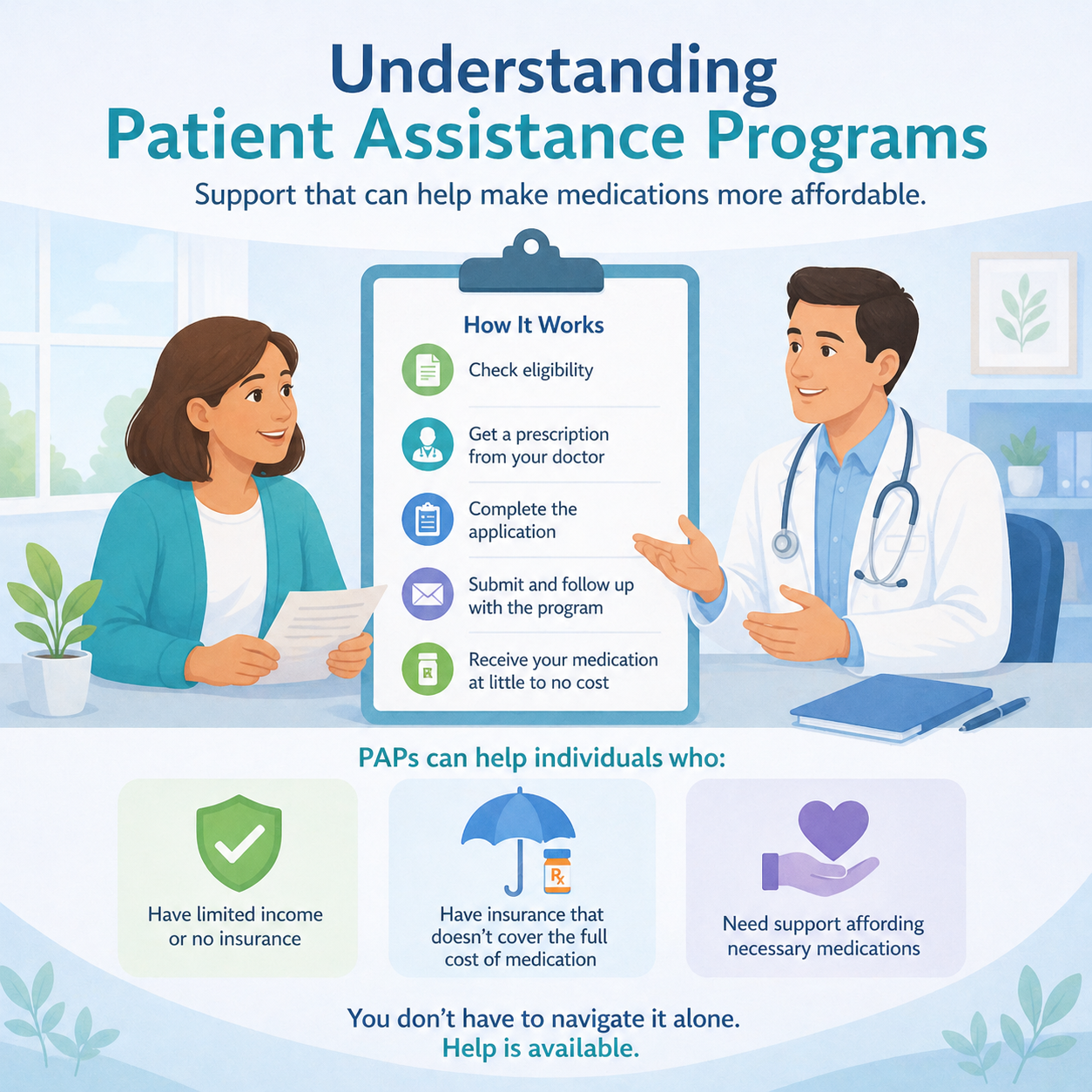
Patient Assistance Programs are typically offered by pharmaceutical companies to help patients who:
-
Do not have insurance
-
Have limited income
-
Have insurance that does not adequately cover their medication
Each program is specific to a particular medication and manufacturer, which means eligibility and requirements can vary significantly.
Who Qualifies?
While every program is different, most PAPs consider:
-
Household income (often based on Federal Poverty Level guidelines)
-
Insurance status
-
Residency (U.S. citizenship or legal residency)
-
Medical need for the medication
Some programs are designed specifically for:
-
Medicare patients
-
Uninsured individuals
-
Patients whose insurance denies coverage
How Hard Is It to Get Approved?
Approval isn’t automatic — and it’s not always simple.
Many programs have:
-
Strict income limits
-
Detailed documentation requirements
-
Specific application processes
Even small errors or missing information can lead to delays or denials.
That said, many people do qualify, especially when the application is completed thoroughly and correctly.
What’s Involved in the Process?
Applying for a Patient Assistance Program often requires multiple steps:
Documentation
-
Proof of income (tax returns, Social Security statements, pay stubs)
-
Insurance information
-
Personal identification
Provider Involvement
-
A prescription from your doctor
-
Physician signatures on application forms
-
Sometimes additional medical documentation
Application Submission
-
Completing program-specific forms
-
Faxing or uploading documents
-
Following up with the program
Ongoing Requirements
-
Some programs require re-enrollment every 6–12 months
-
Updates if income or insurance changes
Real-World Examples
Example 1: Brand-Name Medication with No Coverage
A patient is prescribed a high-cost medication that is not covered by their insurance.
Scenario:
They apply to the manufacturer’s PAP, provide income documentation, and receive approval for free medication shipped directly to their home.
Example 2: Medicare Patient with High Out-of-Pocket Costs
A Medicare patient reaches a coverage gap and cannot afford their medication.
Scenario:
They apply to a PAP that accepts Medicare patients and receive assistance covering the medication cost for the remainder of the year.
Example 3: Application Delays Due to Missing Information
A patient submits an application but forgets to include proof of income.
Scenario:
The application is delayed or denied until documentation is provided, adding weeks to the process.
Example 4: Doctor Coordination Required
A patient qualifies financially but their application is incomplete without physician input.
Scenario:
The process is delayed while waiting for the doctor’s office to complete and return required forms.
Why the Process Can Feel Complicated
While these programs provide valuable support, they often require:
-
Careful attention to detail
-
Coordination between patient and provider
- Ongoing follow-up
For many patients, navigating multiple programs — each with different requirements — can feel overwhelming.
The Bottom Line
Patient Assistance Programs can be a lifeline for individuals who need help affording medications, but they do require time, documentation, and persistence.
Understanding the process ahead of time can help you avoid delays and improve your chances of approval.
If you or someone you know is struggling with medication costs, it may be worth exploring what options are available.